Photos by Bob
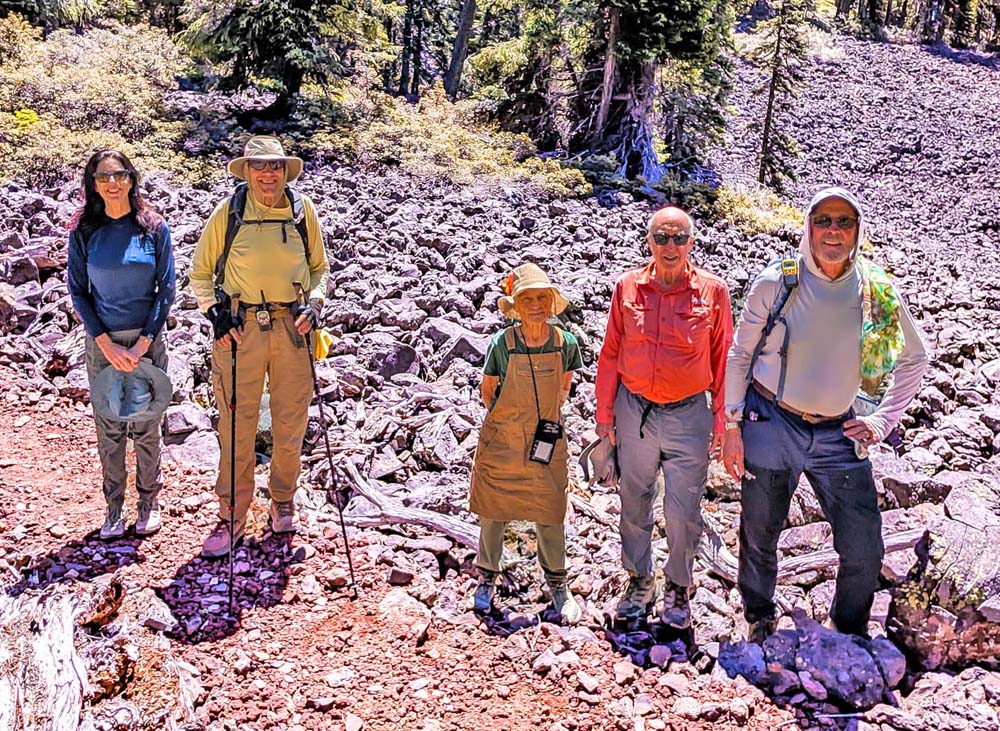
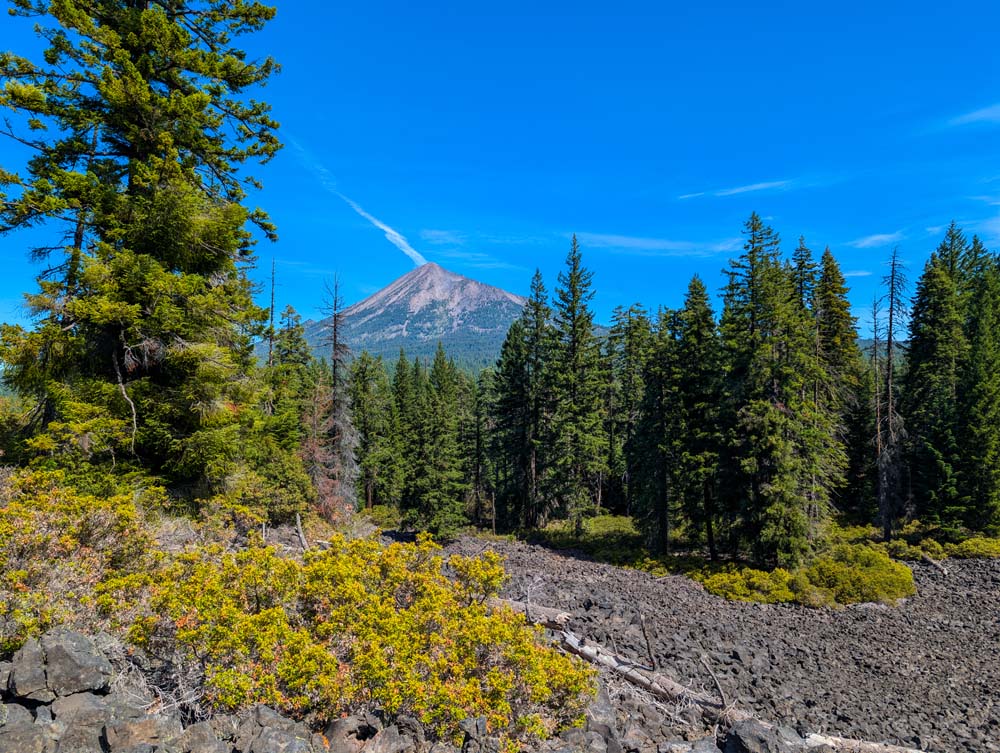
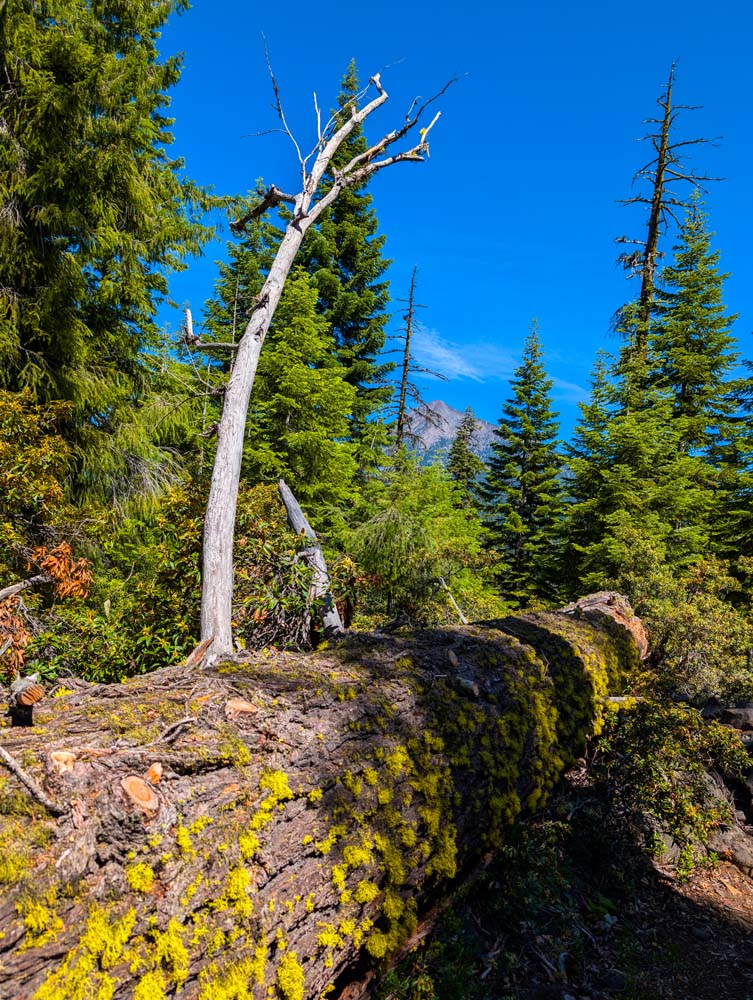
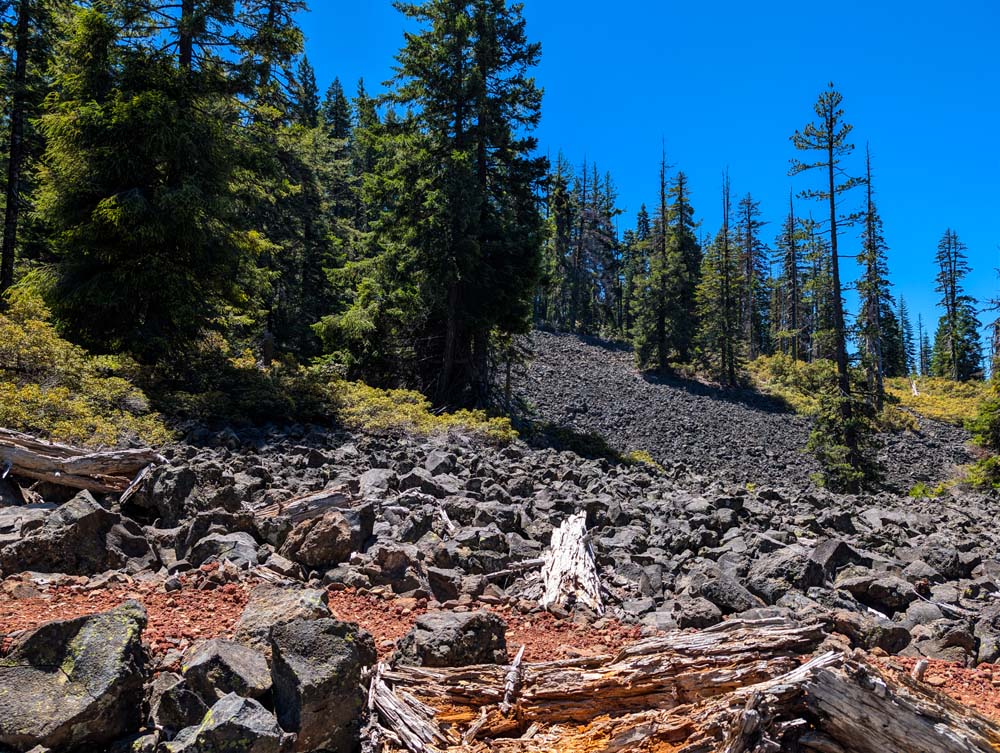
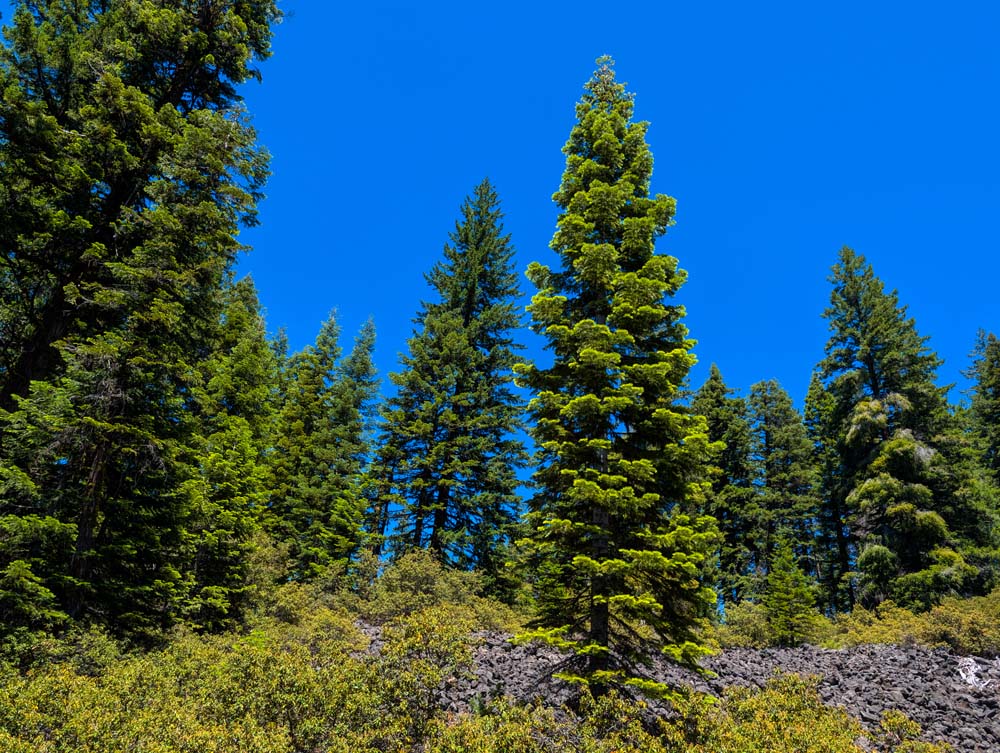
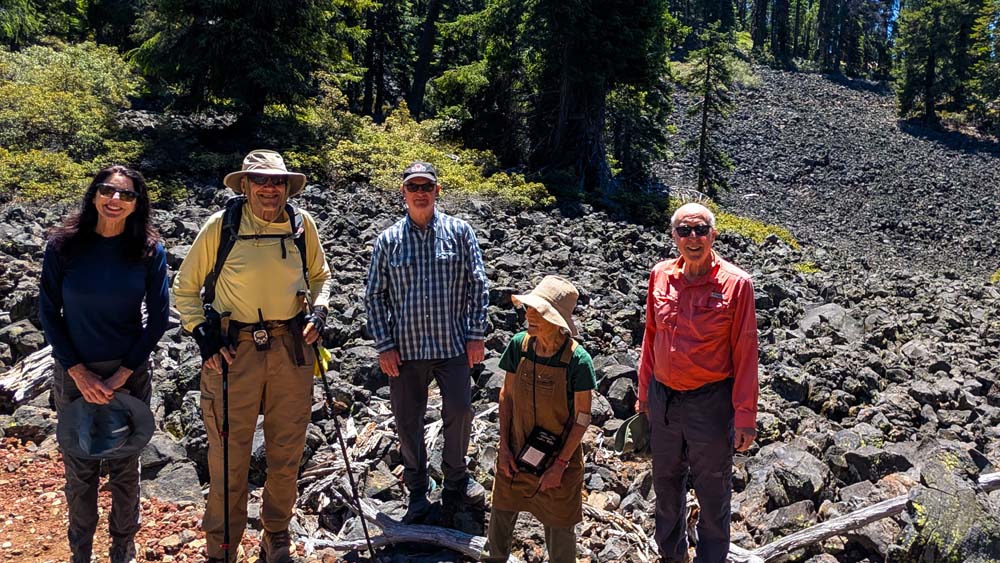
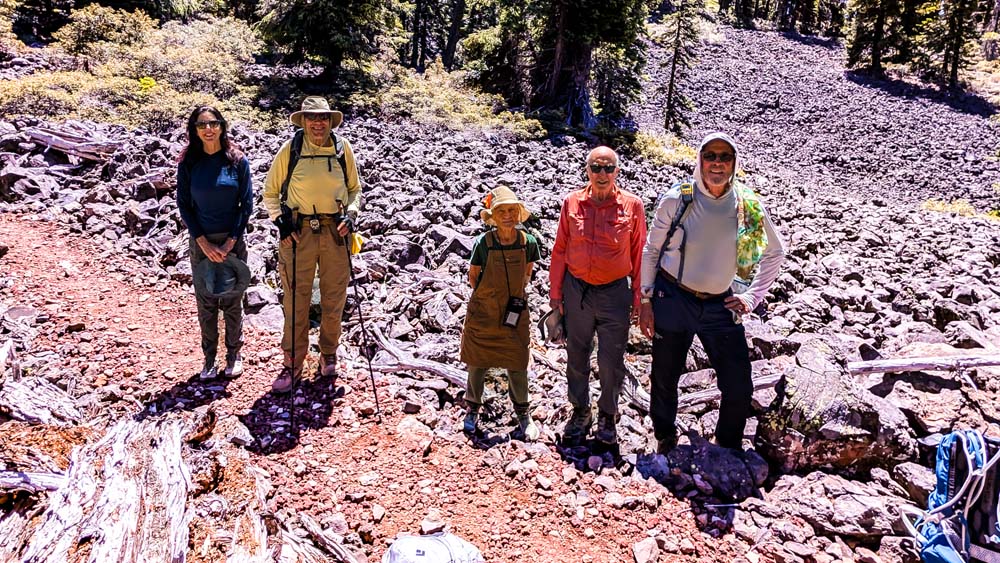
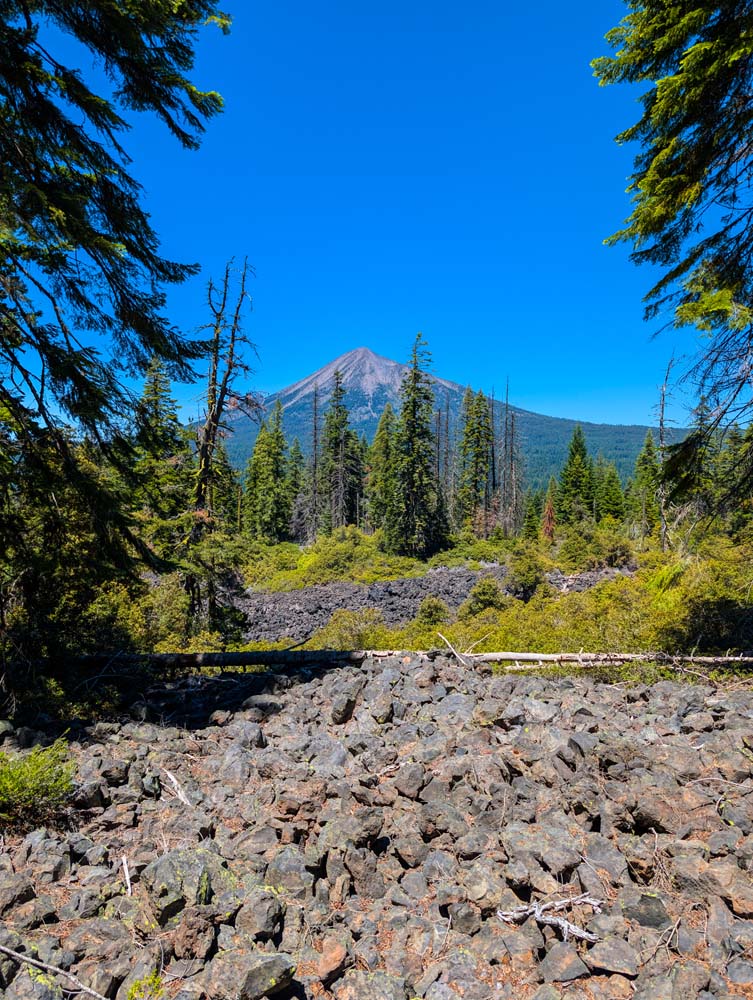
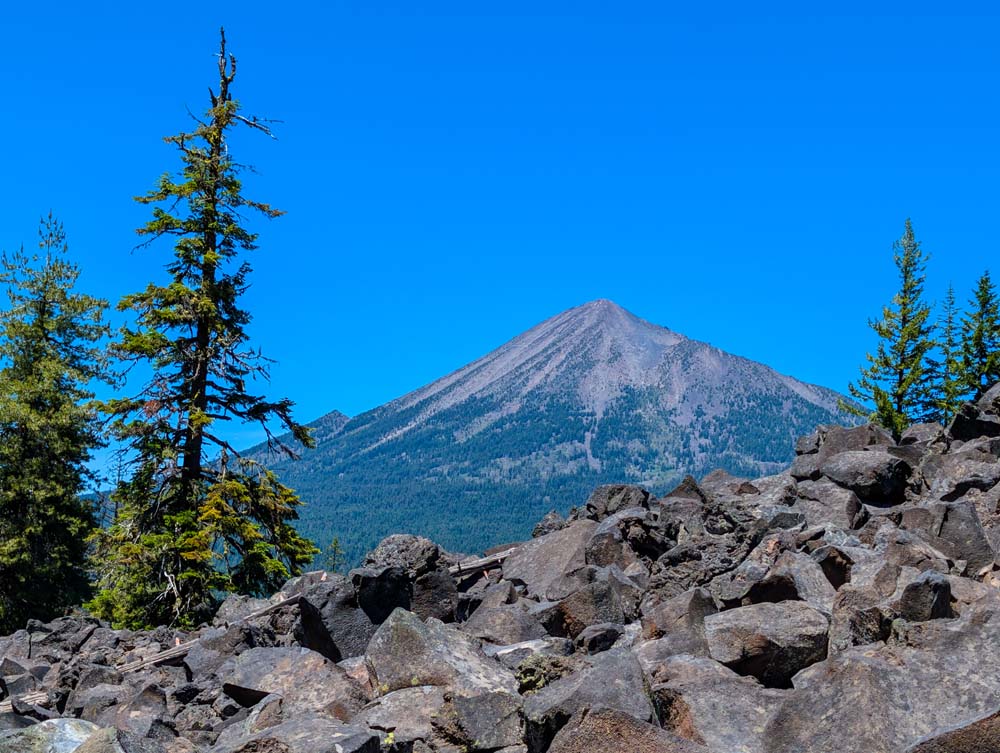
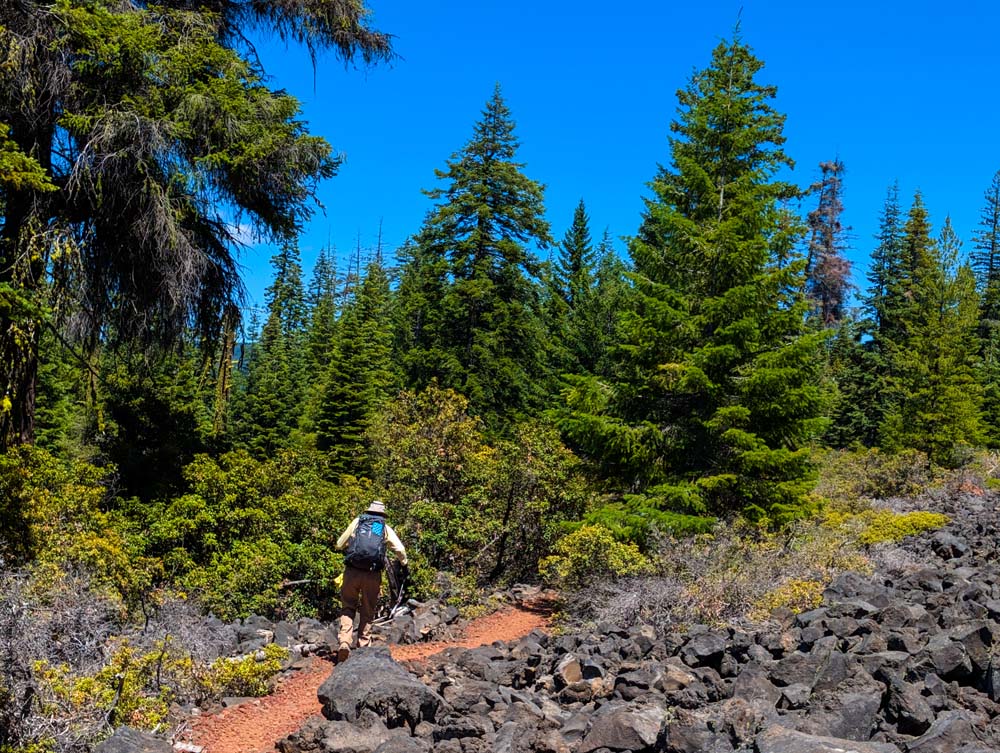
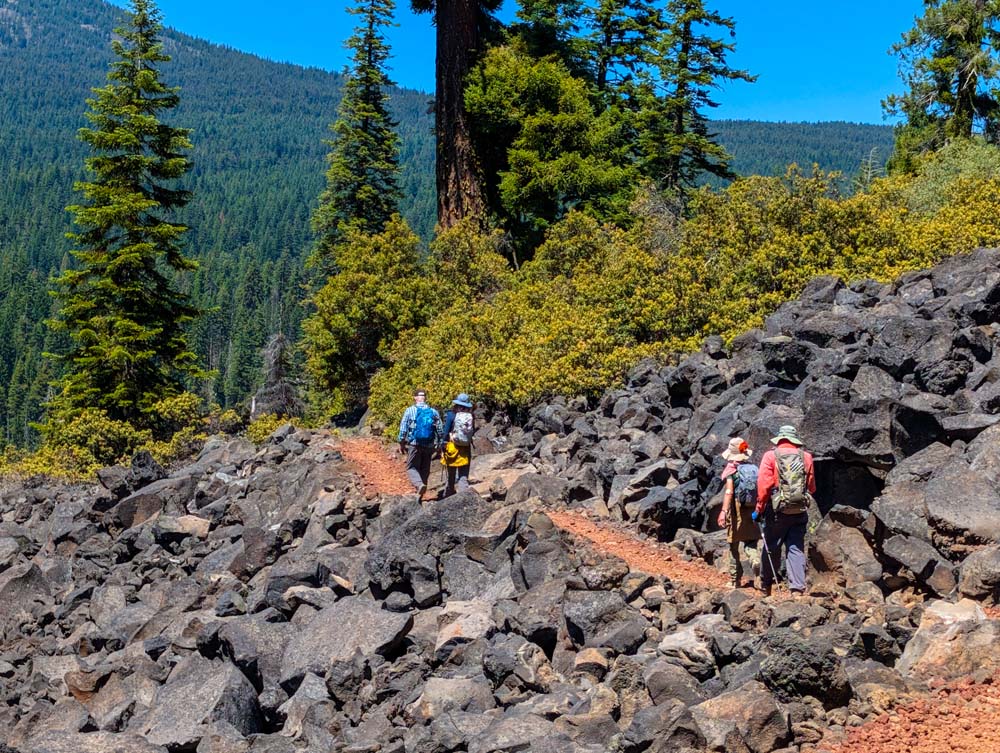
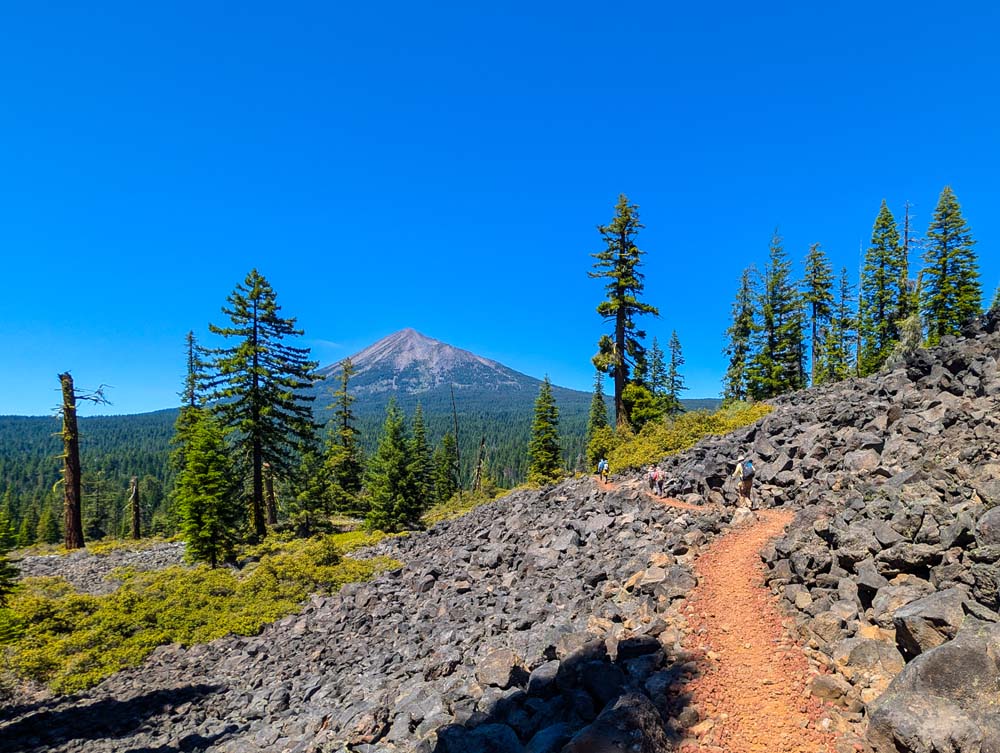
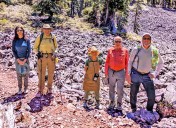
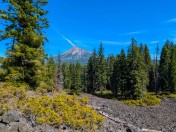
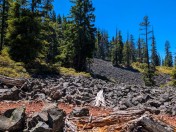
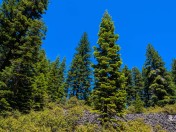
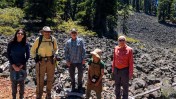
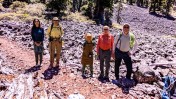
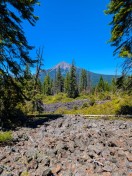
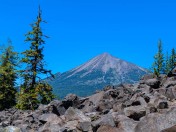
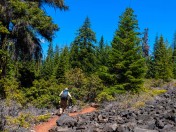
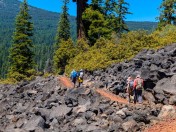
Six of us headed off Wednesday on a perfect day to explore the western flank of Brown Mountain and its patchwork of tall firs and shrubs growing on an otherwise impassable expanse of jagged rock. We had the PCT to traverse across this volcanic carnage. Even with a recent covering of red scoria on the trail, which footprints had beaten down to fill the gaps in rocks making up the trail, it was still a rocky trail. Fortunately, none of us were wearing trail-running shoes. But even with good soles, the uneven trail made this 8-mile stroll, with 600 feet of elevation gain, a moderately difficult hike. Your eyes had to be down on the trail to negotiate steps. However the time looking up was rewarded by the views across the stark black rock and the emerald-green patches of forest. And on the return, we were rewarded with Mount McLoughlin dominating most of the views.
Instead of a flower report, I will provide a brief summary of the geology.
Brown Mountain differs from Mount McLoughlin in that it is essentially a shield volcano, whereas Mount McLoughlin is a stratovolcano. Brown Mountain erupted mainly basaltic-andesite lava that was fluid enough to spread outward and build a broad shield rather than a steep cone. Radiometric dating indicates it erupted between about 60,000 and 12,000 years ago, making it one of the youngest volcanoes in the southern High Cascades. We were walking on the 12,000-year-old lava. The rock, blocky ʻAʻā lava, exceeds 250 feet thickness and made this hike a unique accomplishment.
-
Group
-
PXL_20260701_175745668.RAW-01
-
PXL_20260701_181151724.RAW-01
-
PXL_20260701_193709783.RAW-01
-
PXL_20260701_195712595.RAW-01
-
PXL_20260701_200015950.RAW-01
-
PXL_20260701_200126181.RAW-01
-
PXL_20260701_204839636.RAW-01
-
PXL_20260701_210144489.RAW-01
-
PXL_20260701_211415847.RAW-01
-
PXL_20260701_212123349.RAW-01
-
PXL_20260701_212128282.RAW-01